Scripture: Galatians 5:22–6:2
The churches in Galatia were a mess. At least, according to Paul. The book of Galatians is different than a lot of Paul’s letters, because it was to a group of churches, not just one. If you look on a map of Paul’s journeys to share the Gospel, the region of Galatia was often one of his first stops. Derby. Iconium. Lystra. Antioch. Paul had seen success in these churches, and new converts had joined the church. And then he left and moved on.
But then he began to hear about those who had come along behind him: “Paul was great and his message was true. But now you need to hear the rest of the story.” And that story was a new set of cultural and religious requirements for the Jesus-followers to jump through. To follow Jesus, you have to look like this. And act like this. The rules of the culture created an uneven set of hurdles to jump over.
Paul was incensed. The freedom of Christ didn’t come with an asterisk. There was not a set of “have-to’s” alongside of the embrace of grace. So, in a letter back to the churches there, he lit into everyone who he felt was putting conditions on his message of inclusion and love. He was mad. He called people names. He graphically told them that if they really wanted to circumcise someone so badly, he had a suggestion of where the knife should go…
And then, somewhere along in Chapter 4, he took a deep breath and tried a different tack. With a bit more grace and patience, he suggested that the inclusive love of Jesus might look like this…
Galatians 5.22–6.2
5 By contrast, the fruit of the Spirit is love, joy, peace, patience, kindness, generosity, faithfulness, 23 gentleness, and self-control. There is no law against such things. 24 And those who belong to Christ have crucified the flesh with its passions and desires. 25 If we live by the Spirit, let us also be guided by the Spirit. 26 Let us not become conceited, competing against one another, envying one another.
6 My brothers and sisters, if anyone is detected in a transgression, you who have received the Spirit should restore such a one in a spirit of gentleness. Take care that you yourselves are not tempted. 2 Bear one another’s burdens, and in this way you will fulfill the law of Christ.
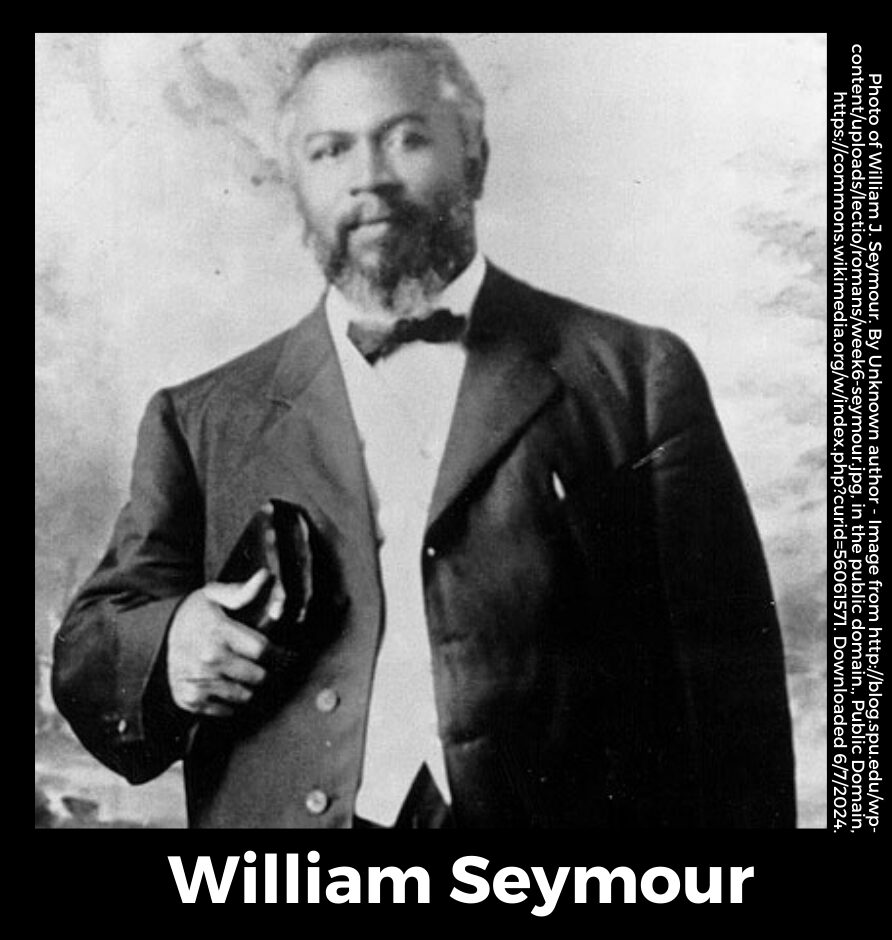
Compare the churches in Galatia with the story of William Seymour. He was born a black man in Louisiana in the late 1800’s: the Reconstruction era in the South. He had plenty of people tell him that he had no voice. He had no voice in Louisiana. No voice in the northern cities where he moved to find work, but found only menial jobs. No voice in Houston, Texas, as he began to move west in hopes to find a new life.
But what he did find in Houston, however, was Lucy. Rev. Lucy Farrow. Farrow was the niece of Frederick Douglass, and a preacher. She asked Seymour to pastor her church in Houston while she spent time ministering in Kansas. In Kansas City and Topeka, and Columbus, south of Pittsburg, Lucy saw these manifestations of the Holy Spirit, including what she called “unknown tongues.” When she returned to Houston, she began to teach Seymour about her experiences, and he began to experience the same manifestations of the Spirit himself. Eventually, he moved to Los Angeles, CA, where he began to preach and teach and see these Spirit manifestations regularly. He had begun to find his voice.
His gathering of Christians in LA met with plenty of disdain. This was in 1906, and even in the openness of the West, the long arm of the KKK had influence, and a gathering of blacks and whites and strange spiritual experiences made people nervous. They moved from house to house, from building to building, until they found a place on Azuza Street. And here, everything changed. A collection of racially diverse people, cooks and janitors and porters and washwomen, all of a sudden began to experience a Spirit-filled revival. Before long, everybody showed up. Three services a day. 800 people in the building, with 400–500 waiting outside on the street. No publicity. No budget. Just the power of the Holy Spirit at work. People saw what was happening there, and began to find their voices, too!
Seymour insisted on keeping these gatherings diverse and open to all. You may not be surprised that white religious leaders showed up, and wanted to add qualifications to the movement…add their own “rest of the story”…their own stipulations. They wanted to keep things separate and segregated. But William Seymour put them out on their ear. That’s not what was happening here, and the Holy Spirit didn’t care about salary or race or academic degree. From Kansas to Houston to Azuza Street in California, a new movement had begun, and it changed the face of American religion from that point on!
Today we talk about the Charismatic Stream of the Church. It is the third week in our series on Richard Foster’s Streams of Living Water. Man, do we have some baggage on this one! I won’t ask for a show of hands from folks who honestly feel a little bit nervous when it comes to Charismatic churches, or Pentecostal preachers, or speaking in tongues and other gifts of the Spirit. So, I would suggest that this is an important Stream for us to talk about, so that we can get some things out in the open. Like all of the six streams, Foster sees a Biblical beginning and a consistent stream throughout the history of the Church. A few points…
The Spirit Empowers
This sounds obvious, but I want to dig a little deeper. The experience that gets all the press is speaking in tongues. And I believe that this is a valid gift of the Spirit, that many Christians have. I do not, but I know people who do. I have seen people practice this gift, in worship and in prayer. But I also think that the Charismatic Tradition is about more than speaking in tongues, and so does Foster. He suggests that one of the biggest strengths of the Charismatic Tradition is its resistance to our attempts to domesticate God. God is bigger, and does more, and is less predictable, than our attempt toward domestication. Part of what scares some of us about the Charismatic Movement is that it doesn’t seem completely “in control”….and that’s the point! The unpredictable work of the Spirit in our worship and our mission and our ministry is not meant to always follow a strategic plan. Or an annual calendar. Sometimes, the Holy Spirit shows up in ways and times that we don’t expect Her! Foster highlights a few historic examples of this Spirit-Empowerment:
- Hildegard of Bingen, who was a medieval mystic and preacher and prophet and artist and musician and important voice in Christian environmental theology, a thousand years ago.
- Francis of Assisi, who demonstrated the power of the Spirit in his preaching and supernatural engagement with the natural world. Here was a man who preached to the birds and tamed the wolves.
- George Fox, who favored lively preaching and charismatic and unplanned worship services. When he was hauled into court for this supposed heresy, he told the court that they should tremble at the name of the Lord. The judge in response called him a ‘quaker.” The name…and the movement…stuck.
- Each of them, like William Seymour, broke the rules of “supposed to,” and let the Spirit show the Church a new way to be!
- And Titus! Galatians tells of an uncircumcised Gentile that Paul had converted and then relied on in his missionary work. Some Christians wanted Titus to be circumcised, to fit in their categories. But Paul refused. He didn’t want their extra rules to be the reason for Titus’s acceptance. The manifestation of the Spirit was his membership card in the church, not any of their additional requirements.
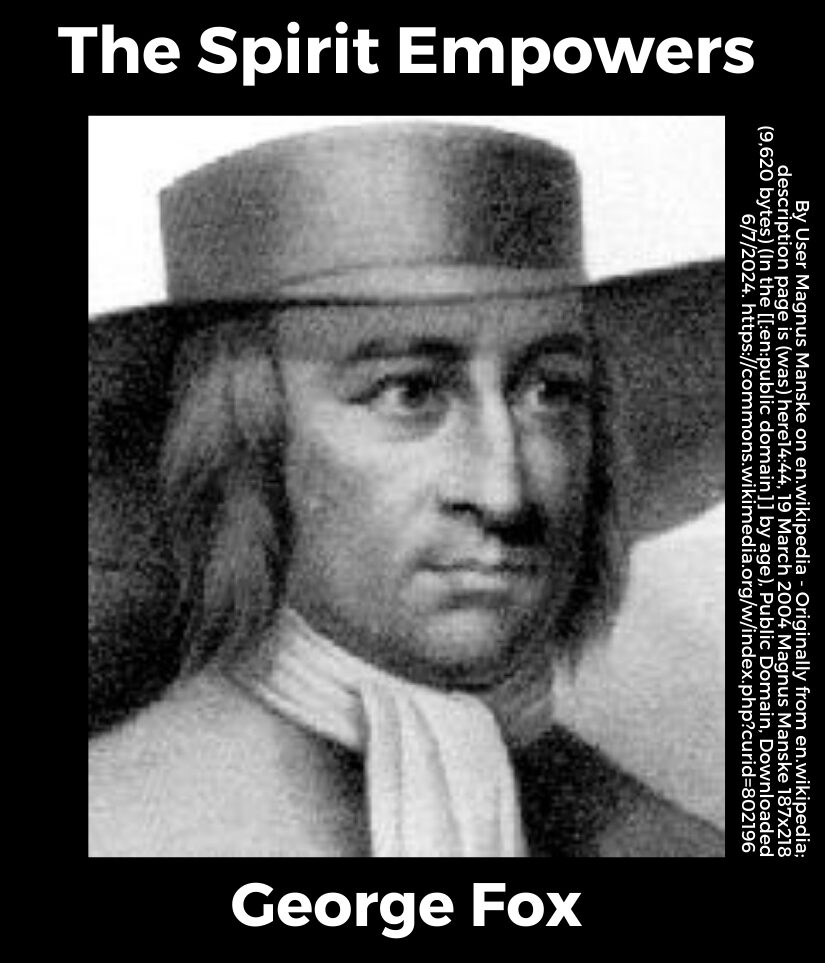

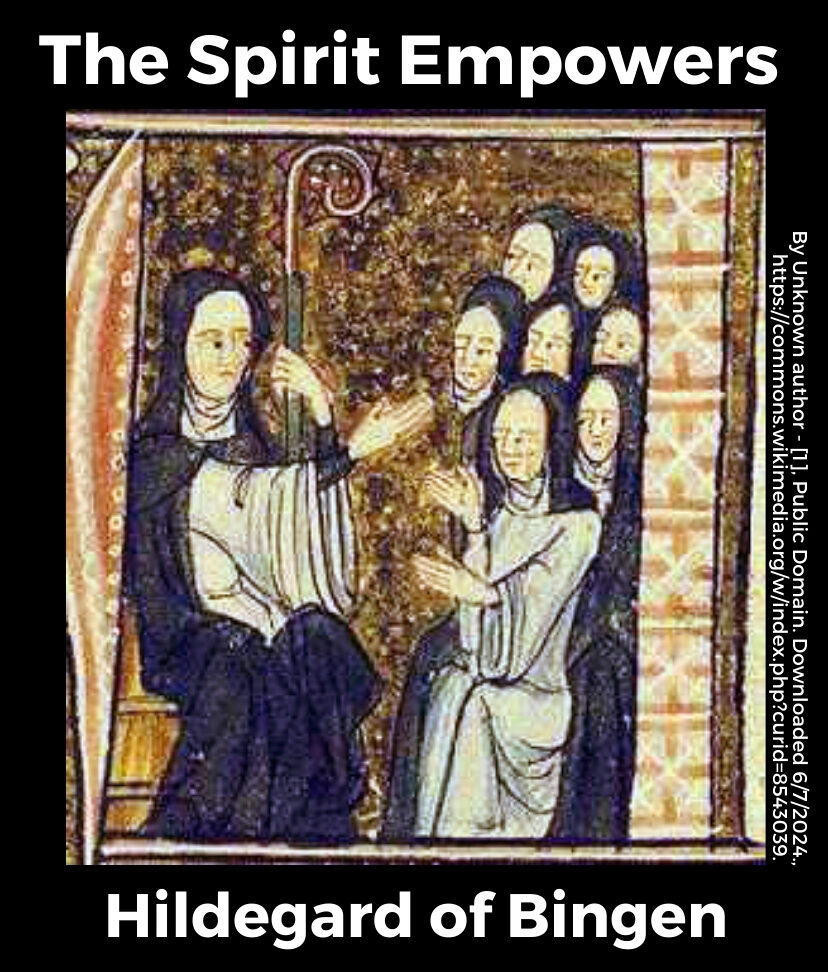
Since we are empowered by the Spirit, we are not beholden to power expectations of this world.
I grew up in a denomination which was incredibly suspicious of anyone in the Charismatic tradition. Many folks believed that speaking in tongues was fundamentally fake and no one actually did it…they just pretended. I used to think that this was about what Christian Schwartz calls gift projection. In the 3 Colors of Ministry book that we have studied at various points as a church, he suggests that we have the tendency to suggest that the gifts that we have…are the important ones. And the inverse is also true…the gifts that we don’t have…aren’t really important. So, for those of us who don’t have the gift of speaking in tongues, it is easy to suggest that it is at best unimportant, at worst, completely made up. I thought that was what all that was happening in the denomination of my youth.
I think that gift projection is part of it, but I also think there was something more systemic going on. Many in the denomination in which I grew up had a certain hierarchy of power expectations. Voices of white people are more powerful than voices of black or brown people. Preacher’s voices are more powerful than laypeople. Adults more important than children. Heterosexual voices more important than gay or lesbian voices. And of course, men’s voices are more important than women’s. In fact, that denomination once again THIS WEEK plans to make it official that any church that dares to believe that a woman has been called by God to preach must be forcibly removed from the body.
The Charismatic Movement, then, is incredibly threatening to this worldly power structure. Because it takes that hierarchy, and lays it on its side. Anyone can exhibit the power of the Spirit. This is what made Azuza Street so jarring. It didn’t fit any of the categories of whose voice mattered more. It followed the example of the Spirit who showed up in the voices of a bunch of Galilean fisherman and tax collectors, not in the trained or powerful. And that movement has not flinched since. What results, then, is an incredibly diverse church that recognizes the preaching ability of women and men, black and white, young and old. If you look at the leadership of a lot of traditional denominations, you’ll see it is mostly a bunch of old white dudes. But look at the list of speakers at a Pentecostal Revival! They know that God shows up, regardless of what the power expectations of the world’s rules say.
Which is, by the way, what Paul said to the Galatians, in Chapter 3: “There is no longer Jew or Greek; there is no longer slave or free; there is no longer male and female, for all of you are one in Christ Jesus.”
Sorry about your tired old power structures. Sorry about your rules. The Spirit doesn’t care.
Which leads us to a third point…
Freedom for each other, not from each other.
Unlike in other weeks, I don’t want to spend a lot of time talking about the excesses and shortcomings of the Charismatic Movement. To be honest, I think that a lot of us already have a healthy suspicion of that tradition, and I’d rather talk about its strengths. But I will tell one story. When I was in college, one of my friends was from this tradition. He invited us to a church service one Sunday night to attend his baptism, and I realized later it was for the baptism of the Spirit. The hope was that he would receive the gift of tongues. He did not, and it was a painful experience. Somewhere along the way, some elements of this tradition came to believe that if you don’t have the right gifts, you don’t have any gifts. They have re-created the hierarchy, with new rules. If you don’t have these gifts, you are looked down upon, and sometimes are even unwelcome.
Paul had no such place for the gifts of the Spirit. Again and again, he wrote that the Spirit brings us together, holds us together. We receive gifts so that we might share this power for each other, not use it as a weapon against each other. It’s why he ended his book with the words that I read earlier, and that I will read to you again. Because it is a powerful reminder that whatever our gifts are, they should look like this. Exhibit this fruit.
Galatians 5.22–6.2
5 By contrast, the fruit of the Spirit is love, joy, peace, patience, kindness, generosity, faithfulness, 23 gentleness, and self-control. There is no law against such things. 24 And those who belong to Christ have crucified the flesh with its passions and desires. 25 If we live by the Spirit, let us also be guided by the Spirit. 26 Let us not become conceited, competing against one another, envying one another.
6 My brothers and sisters, if anyone is detected in a transgression, you who have received the Spirit should restore such a one in a spirit of gentleness. Take care that you yourselves are not tempted. 2 Bear one another’s burdens, and in this way you will fulfill the law of Christ.
Leave a Reply