Scripture: Matthew 17:1–8
Aren’t you a few months off, preacher? Aren’t we supposed to talk about the Transfiguration on… Transfiguration Sunday? And isn’t that way back the week before Lent begins? Why are we talking about it here after Pentecost? Man, you all have a lot of good questions! And we’ll get to them in a minute.
Today we finish our series on the Streams of Living Water, a book by Richard Foster that has helped us think about six distinct traditions within the 2,000-year history of the Church. And today we have a final category of the Incarnational Stream, or what he calls the “sacramental” life.
Let’s start with the word itself…and a theological distinction. We tend to talk about the word “incarnation” in two distinct but related ways. The first is “The Incarnation,”—with a capital “I.” This concept is how we describe how the Eternal Christ, the Divine Logos, entered into our reality, becoming the Incarnate Word. “God became flesh and dwelt among us.” Jesus came as a baby, with a baby body, and baby needs, and a baby brain. In the Church calendar, this is the concept that we celebrate at Christmastide. Anyone feel a little weird singing “Joy to the World” in June? The song wasn’t written as a Christmas song at first, but is a text based on Psalm 98 and the Triumphant Day of the Lord. But it is certainly appropriate theologically to sing at Christmas, as we acknowledge the power of the baby Jesus in the manger as our Incarnate Word King. Yet, while it seems out of place in June, really any time we acknowledge the Incarnate Word of Jesus on earth, it’s okay to sing: “He rules the world with truth and grace/ And makes the nations prove/ The glories of His righteousness/ And wonders of His love.”
So, when we read this Transfiguration text from Matthew, we are seeing through the eyes of Peter and James and John this capital-I Incarnation. They were reminded at the Transfiguration that Jesus was not only human, but also divine. They had their eyes opened to the majesty and glory of who Jesus truly was. In case they didn’t get it with Jesus’s glowing appearance, the ground-shattering voice from heaven reminding them “This is my son!” should have clued them in. At various moments throughout the New Testament, we see these capital-I Incarnation reminders: the angels singing at his birth, the glory of the Transfiguration, the eye-popping post-Resurrection appearances. These are moments in which humans catch a glimpse of the glory of God, Incarnate God-with-us here on earth. Capital I.
But then there is this second way we use the word “incarnation.” With a little “i.” When we talk about things being “incarnational,” it is like an echo of the glory of God come to earth in Jesus. Jesus was here for 30 or so years, but that doesn’t mean that the glory of God stopped showing up after that…or that the glory of God had never shown up before then. We see Jesus as the fullest expression of that Incarnation…hence the upper case “I.” But we try to have our eyes open every day to the ways that God is present in our world.
I would suggest that we see this “little i” incarnation in the passage from Matthew, too. Did you notice the moment that Peter was so caught up in the glory of Jesus that he tried to capture it? He asked Jesus if it would be okay if he built tents to preserve the moment. To honor Moses and Elijah and Jesus in these moments of glory? Now, I will admit to beating up a bit on Peter in sermons in the past. “Silly Peter, you can’t capture the Incarnate glory of God in a tent! What’s wrong with you?!” Yet, perhaps I and other preachers pick on Peter a bit much. I think there is something valuable about his attempt. I think what Peter was trying to do was to participate in the incarnational life of faith. Little-i, sure, but still valuable. Peter saw what was happening around him, and he wanted to integrate it into normal life. “Let’s build some tents, I’ll get a fire going, we can have some dinner.” Peter wanted to find a way to capture the extraordinary experience all around him, into the ordinariness of life.
Foster says that there is nothing wrong with this inclination. In fact, his sixth and final stream is called the Incarnational Tradition, or the Sacramental Life. You have heard me preach this sermon before. We have done a Lenten series on Tish Harrison Warren’s book, Liturgy of the Ordinary, about practicing our faith through the making of peanut butter sandwiches or commuting to work. I have quoted Kathleen Norris’s book, The Quotidian Mysteries, about the value of living our faith in our households, with our families, day in and day out. And I don’t know how many times you have had to hear me quote Frederick Buechner on this:
Listen to your life. See it for the fathomless mystery it is. In the boredom and pain of it, no less than in the excitement and gladness: touch, taste, smell your way to the holy and hidden heart of it, because in the last analysis all moments are key moments, and life itself is grace.
The inclination of Peter to see God in the domestic tasks of making up a bed for his guests is holy work. Little-i incarnation is the practice of seeing the glory of God in the ordinary and everyday. Buechner reminds us that the incarnational life doesn’t much bother with a distinction between “secular vs. sacred.” “…life itself is grace.” Foster echoes this by giving us historical examples of the tradition that aren’t necessarily explicitly religious, from what we would normally call the “sacred” sphere, like most of the people he has talked about in the book. We could have titled this series “Church History: 101” as it has been an opportunity to look at many different voices and perspectives from the last couple of millennia. We have talked about theologians, church leaders, desert mothers and fathers, preachers, and prophets in their time. But the incarnational life looks decidedly “un-churchy.” Which is kind of the point. God doesn’t only show up in our churches! God doesn’t only work through preachers and prophets. His examples include:
- Authors like T.S. Elliot and Fyodor Dostoyevsky and Flannery O’Connor, who used their gifts to help people see God’s glory through their words.
- Musicians like Johann Sebastian Bach and George Frederich Handel, who used their incredible musical talents to worship God and invite others to do the same.
- Artists like Michaelangelo and Rembrandt and Leonardo da Vinci, using their art to help folks see that glimpse of God’s glory.
- Politicians and statesmen like Dag Hammarskjold, who had gifts of leadership and used them for God’s glory.
- And in Scripture, he points to Mary, the mother of Jesus, whose loving care of her family was just as valuable as Peter’s sermons or Paul’s letters.
You can see how these folks have engaged in the incarnational life as they, like Peter on the Mount of Transfiguration, catch a glimpse of the love or power or grace or glory of God, and do something to acknowledge, or describe, or even begin to capture it. Sometimes in a glorious, artistic way. Sometimes in the ordinary-ness of peanut butter sandwiches. Will any of it ever completely capture God’s glory? Of course not? Just like Peter couldn’t fit the glory of God in a tent. But in the attempt, God is glorified, and God’s people are moved to worship. Each of us practices this life when we see the value of our work, the talents given by God, and the commitment to caring for our families and our everyday tasks, where we catch and proclaim the glory of God on earth.
So, here are our Six Streams. We have traveled down a long runway to get here with all six, and some of you might be wondering when we take off.
- Contemplative
- Holiness
- Charismatic
- Social Justice
- Evangelical
- Incarnational
What is the payoff here? So, for the rest of the morning, I want to deliver three big reveals about what we have been up to the whole time.
The first reveal?
A few weeks ago, I used the metaphor of “home,” referencing American Baptists and the Social Justice Stream. Then last week, I acknowledged that some of us feel more at home in the Evangelical tradition. I could have done the same thing this week, because a lot of us probably see value in the Incarnational Stream. Or the Contemplative Stream. This shouldn’t be a surprise to those of you who have been around a while, but we are not a “one-size-fits-all” church. Here is the reveal: each of these are “home.” To some of us. Probably some more than others. But one of the goals of presenting all of them is to help you discover what your one or two might be. Again, there is an implicit hope that that becomes the way that you reveal Good News in the world. But it is also about self-identifying how God has formed your individual journey.
That is the first reveal: you have a home. Or two. What is it?
Which leads me to Big Reveal #2. This whole thing has been a series on evangelism. Like, for real. The Evangelism Team met a few months ago, and the SLT [Spiritual Leadership Team] met after that, and we wondered how we could get folks to think about their individual faith journeys and what would that look like to share with others. And what does evangelism look like in a church like ours? Again, in a congregation that isn’t “one-size-fits-all,” each of us does evangelism a little differently. Some of you are more structured and assertive in your evangelism, as you come from a more Evangelical tradition. Some of you are more servant or service evangelist like the Social Justice tradition, and believe that we cannot just tell people if we are not meeting their needs. Still others of you would find yourself more in the Incarnational tradition, and your evangelism style would be more relational, everyday, integrated into your life instead of a program or an institutional plan. And so on. You get the point.
And I’m sorry if it felt disingenuous to do an evangelism series and not call it an evangelism series, but let’s be honest…if I told you that we were going to do a six-week series on Evangelism…in the summer…we might set records for low attendance! Because when we think of evangelism, we often think about what we don’t like about it. We had a bad experience with an assertive program with an Evangelical church, like Evangelism Explosion, or knocking on doors and handing out tracts. Or on the flip side, maybe we lost patience with the slow progress of a relational process of sharing with another our faith to the degree that we get frustrated and give up. That word scares a lot of folks because of how some Streams define it.
But the question that the Evangelism Team wanted to get you think about is this: “how are you best suited to show the love of God to the world?” It is less like trying to sell something that people don’t want to buy, and more like finding a new restaurant in town that you want to tell everyone about? That’s evangelion. That’s good news. And we’ve spent six weeks talking about six different ways that that has looked in the history and the current Church. Which of these gets you excited to talk about Jesus? About your faith? About your church? Surprise, you’re an evangelist.
Finally, a third reveal comes with props! A table full, in fact. These are my reading glasses…one of the pairs of them. After age 45 or so, like a lot of you, I start reaching for these if the print is too small on my phone, or a book, or my computer. This is a set of binoculars. If I want to go birdwatching, I will pick these up, so that I can focus on a bird far away. This is my camera, fitted with a telephoto lens. I can not only see, but use this lens to take a picture of things far away or smaller. Or, I can take that one off and use this wide angle lens instead, in order to get more things in the shot. This is a microscope, and it obviously is used to make really small things look bigger. And finally, this is a telescope, designed to help see in the night sky things like planets or the moon or distant nebula.
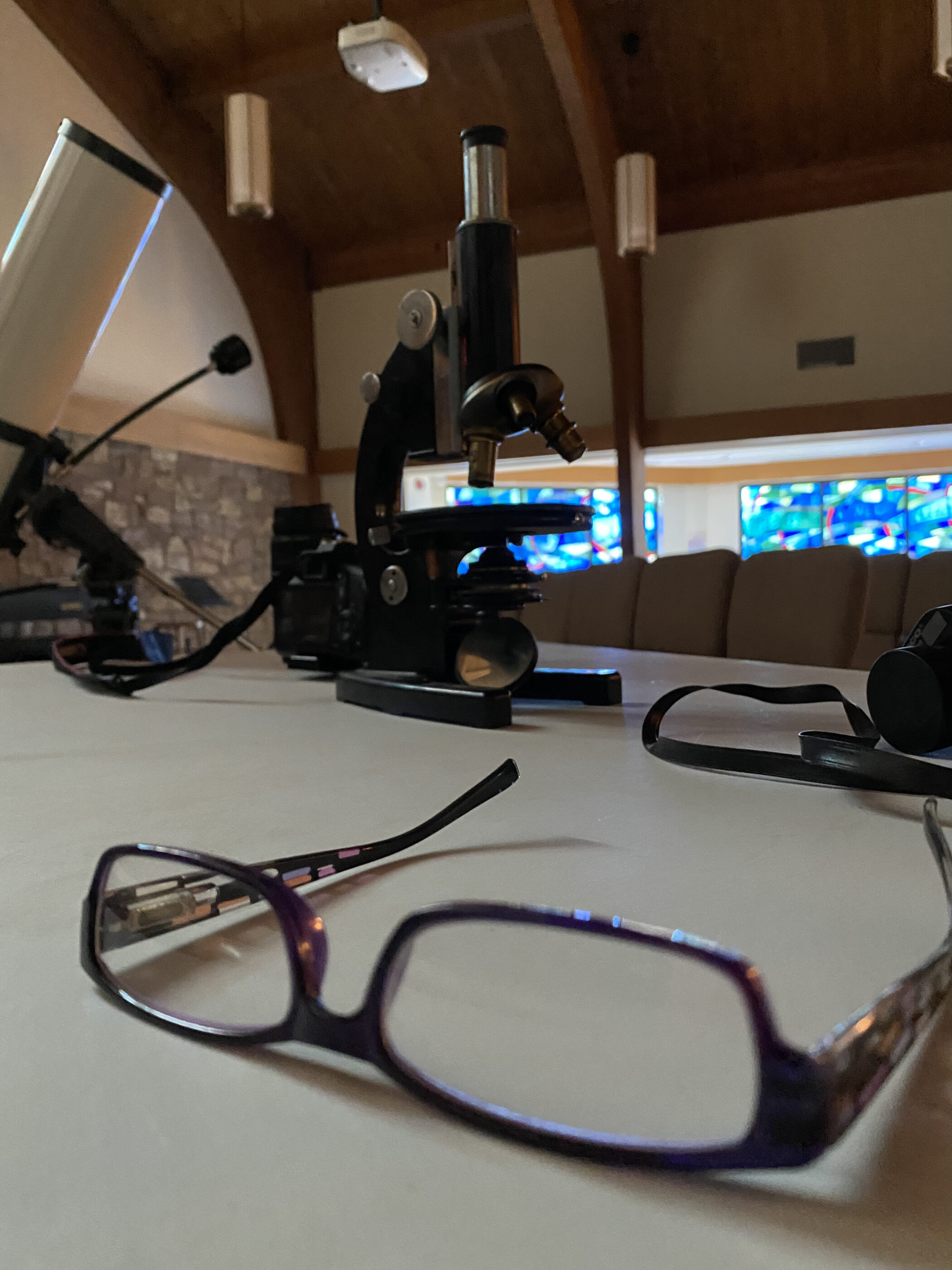
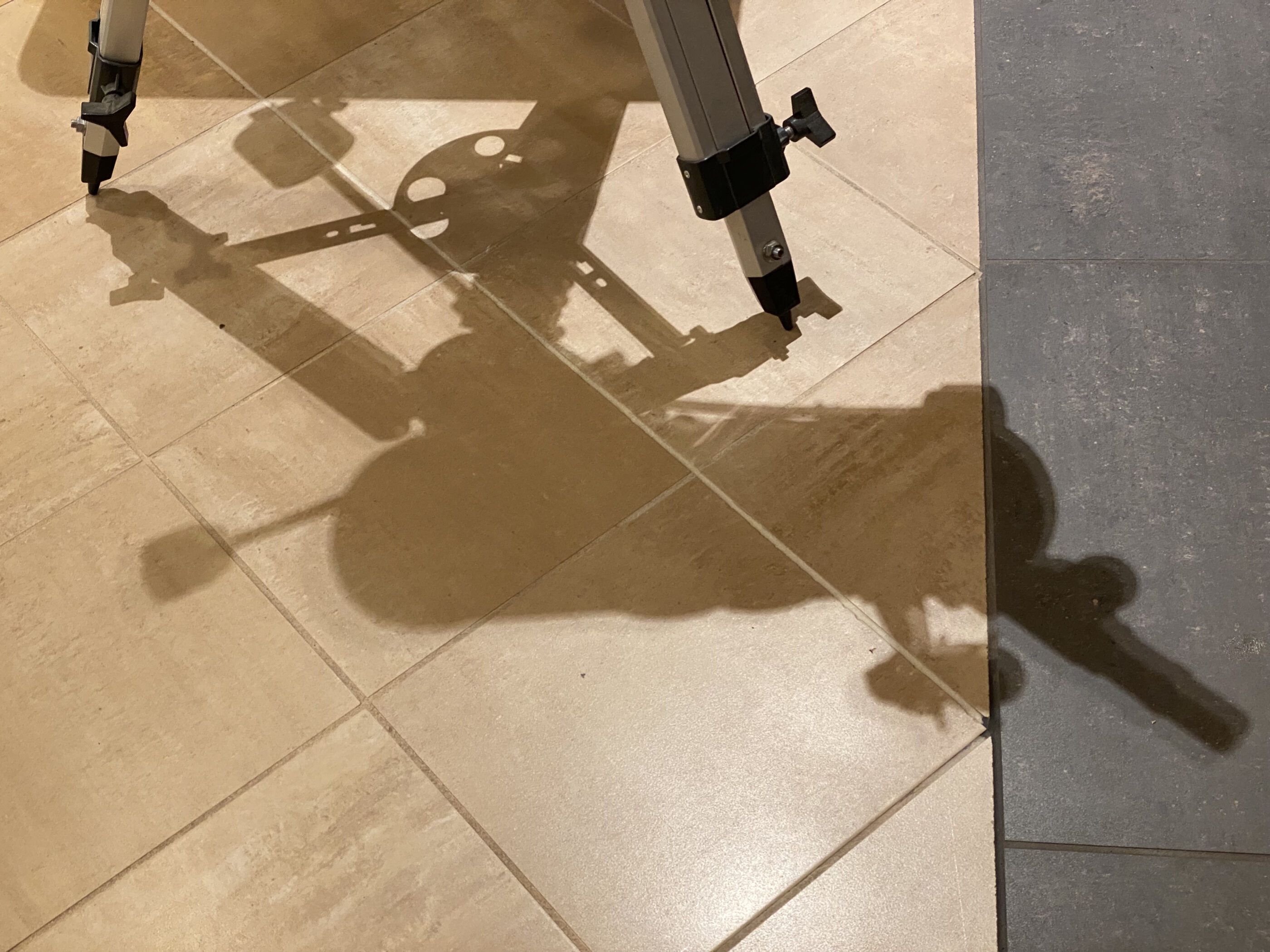
Perhaps you are starting to get the point. Each of these is a lens. Or a set of lenses. Each one of these six lenses is designed differently for a different task. And each one of them is vital for that task. I cannot see the craters of the moon with my readers, nor can I read my book with a telescope. Each lens has a very different value and purpose…as does each of the traditions that Foster writes about in his book. Each one is like a different lens through which to see the world. Some help us open our eyes to the raucous power of the Holy Spirit…others of us teach us how important the Bible is. Some teach us to care for others…others teach us that we have to worry about ourselves first. And without all six of these Streams, we would miss a beautiful and glorious part of the Church. We must be thankful for each of them. None of them perfect, but none of them without purpose. We don’t say “Those people have used a telescope to read a book and that’s dumb!” Okay, but don’t throw away your telescope! The third reveal is 1 Corinthians 12. Think back way to Pentecost, when we talked about Paul’s letter to Corinth, in which he told the people not to assume that their way of doing things is the only way of doing things. That their gift is the only important gift. We have to have all of them, just like a body needs all of its parts. Open your eyes and your mind to the varied and different ways that God has worked through the Church. If you picked out your top two, perhaps stretch yourself to read from the other four. Or talk to someone from the other four. Or simply thank God that the other four exist. Use your lens, AND be ready to ask to borrow someone else’s. You may just see God in a new way.
Leave a Reply