Scripture: Matthew 25:31–33, 41–46
When do you know you are home? When we are driving home to Kentucky, there is a certain bend in the road where we come out of the green wall of trees and hills of Southern Indiana and can see the Ohio River valley open up beneath us. As we enter Louisville, we go over the river, past the Galt House and the big Louisville Slugger bat, through Spaghetti Junction and by the stadiums, through the tunnels under the parks, and then everything opens up into the rolling hills of the bluegrass. We know we are back home.
That is the feeling I get this week, as we arrive at the Social Justice tradition. We have been exploring together Richard Foster’s book Streams of Living Water, looking at various traditions, or lenses, or streams of the history of the Church. Three weeks ago was the contemplative tradition, familiar in many ways, but not always in the wheelhouse for a lot of us. Two weeks ago was the holiness tradition, something more at home to denominations such as Nazarenes, Wesleyans, Church of God, or even Methodists. Last week was the charismatic tradition, really out of the comfort zone for many of us, but home for Pentecostal churches and denominations. But this week, it feels like our family, coming down out of those Indiana hills and seeing the Ohio River and the bluegrass of Kentucky. It feels like coming home.
The Social Justice tradition feels like home for a lot of Baptists, especially American Baptists. It has been a part of our tradition from the beginning. According to Foster, the social justice movement “focuses on justice and shalom in our personal relationships and in the social structures of the world,” in the Biblical tradition of the Old Testament prophets, and the prophetic words of Jesus and the Early Church. To make my point a little clearer, let me name some folks from this tradition, and you may guess what they all have in common.

- Lauran Bethell was the daughter of a pastor, and grew up in the church. Somewhere along the way, she grew a heart for those in need, especially for women caught in the evil systems of sex trafficking. She is one of our American Baptist global servants with International Ministries, and believes that the call of Christ on the Church is to care for these women, and to stand against the systems that trap and dehumanize them.
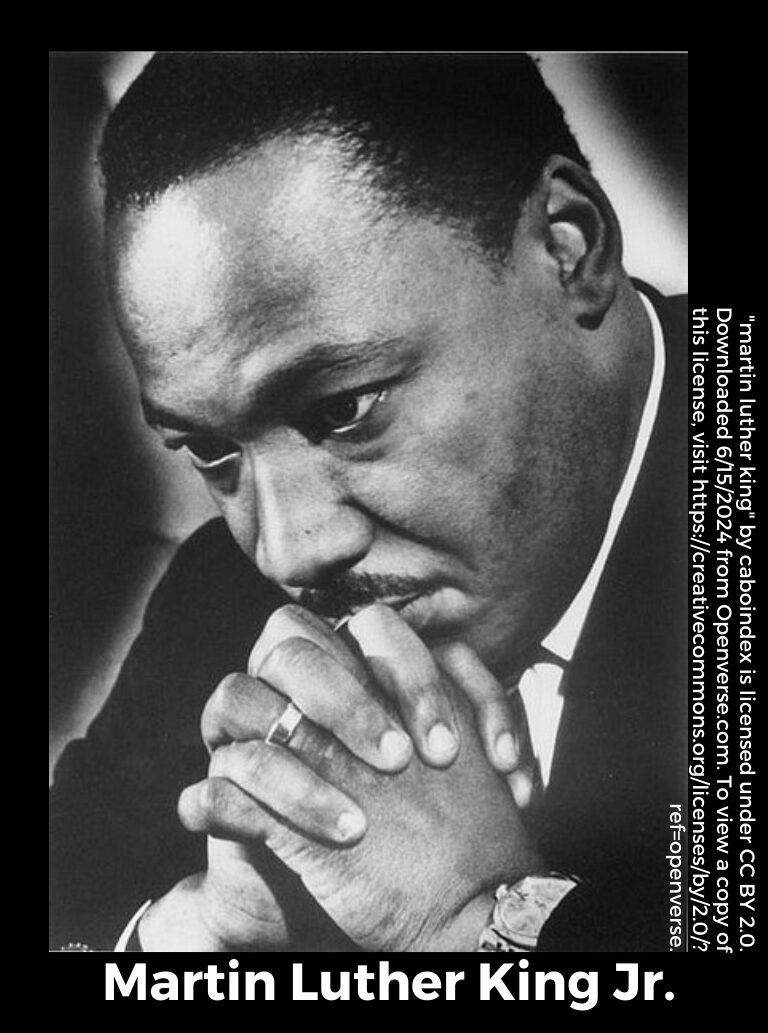
- You’ll recognize Martin Luther King, Jr. Many folks will quote Dr. King, and remember what he did for the work of justice in the civil rights movement. But some forget that he was Rev. King first. He did what he did for justice because he felt called by Jesus to do this work. He was the pastor of American Baptist and National Baptist churches, and he lived—and died—for the work of prophetic justice.
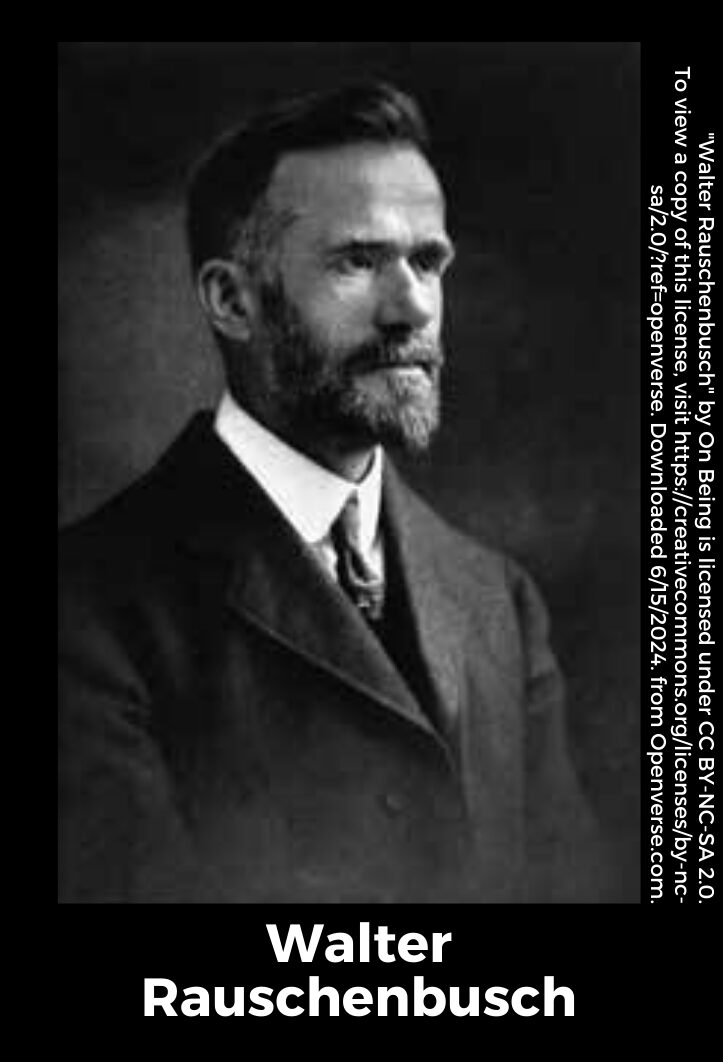
- You may not recognize this face. This is Walter Rauschenbusch. Around the turn of the 1800’s into the 1900’s he studied theology and became an American Baptist pastor and theologian. His first Baptist church was in Hell’s Kitchen, New York. After seeing the deadly effects of poverty, and attending one too many funerals for children who were victims of that poverty, he decided he had to do something. He began advocating for what was called the Social Gospel movement, suggesting that the good news of the Gospel was meant to have an impact on societies and social structures, as well. He taught that societal evils, such as “militarism, individualism, capitalism, and nationalism” sum up the Kingdom of Evil, and that these things are not of Christ.
- Going back a little further, a fourth name is one that we don’t have many pictures of. David Barrow was born in the middle of the 1700’s in Virginia. When he became an adult, he moved out of the state because he couldn’t stand the prevalence of slavery. He became a Baptist pastor, emancipated his own slaves, moved to Kentucky, and preached and wrote from an abolitionist justice perspective. He even corresponded with Thomas Jefferson, trying to convince and convict him on this point. When his Kentucky Baptist association kicked him out for his ideals, Barrow formed a new abolitionist association: the Baptized Licking Locust Association, Friends of Humanity. He and others argued from a Biblical justice perspective that Christ-followers should not be slaveholders, even as Baptists in the south argued the opposite. The divide that separated the country also separated Baptists, and in 1845, Baptists in the South left the denomination and the northern Baptists, now called American Baptists.

- By now, you have realized that all of these pantheons of the Social Justice tradition are Baptists, many American Baptists. One more happens to be the guy that our gym is named after! Roger Williams had a bit of a complicated history with the Baptists. He left Massachusetts to join the Baptists and begin a social justice experiment in Rhode Island. He espoused a radical perspective that governments should not be able to determine what one’s religious belief should be, so he advocated for the rights of Muslims and Jews and for native peoples. When he founded Rhode Island, he did so not from a perspective of colonialism or manifest destiny or doctrine of discovery. Instead, he paid the native inhabitants for the land, and encouraged consistent and friendly relations with them. There is a reason that the northern half our building is named after this guy!
So, in a lot of ways, the Social Justice tradition is our tradition. One that we should be proud of! This is a tradition that, Foster writes, “gives bite to the language of Christian love.” We can talk about love all day, but until we do something about it, something is missing. This tradition is that bite!
Anyone’s arm hurting? Anyone feeling like their shoulder is a bit out of place? Anyone feeling a little sore, from patting ourselves on the back? Don’t worry…Jesus has a remedy for that. Hear now Jesus’s words from Matthew 25, and maybe slip your shoulder back into its socket.
Matthew 25.31–33; 41–46
31 “When the Son of Man comes in his glory and all the angels with him, then he will sit on the throne of his glory. 32 All the nations will be gathered before him, and he will separate people one from another as a shepherd separates the sheep from the goats, 33 and he will put the sheep at his right hand and the goats at the left.
41 Then he will say to those at his left hand, ‘You who are accursed, depart from me into the eternal fire prepared for the devil and his angels, 42 for I was hungry and you gave me no food, I was thirsty and you gave me nothing to drink, 43 I was a stranger and you did not welcome me, naked and you did not give me clothing, sick and in prison and you did not visit me.’ 44 Then they also will answer, ‘Lord, when was it that we saw you hungry or thirsty or a stranger or naked or sick or in prison and did not take care of you?’ 45 Then he will answer them, ‘Truly I tell you, just as you did not do it to one of the least of these, you did not do it to me.’ 46 And these will go away into eternal punishment but the righteous into eternal life.”
OK, then. Not a lot of wiggle room, is there? Any time that we have failed to care for any of the least of these, we have failed to do it for Jesus. I know that you worked at the food pantry last week. I know you advocated for affordable housing. I know you gave money to those doing prophetic work around the world. But you are still a goat. We all are. None of us have been immaculate at this work. All of us participate in the brokenness of the kingdom of the world. Every single one of us has failed to care for the least of these, in one way or another. If you were feeling too good about yourself, Jesus will take care of that, right away.
And so will Foster. He suggests that the Social Justice movement has its blind spots. Its excesses. Its perils. Take a look at three of the ways that this movement—in a lot of ways our home—can get turned around.
Three Excesses of the Social Justice Stream
An End to Itself
Our belief in Jesus convicts us to do good works for others. But far too often, we find ourselves focusing only on those works, and forgetting about Jesus. The result is a practical atheism: the God who calls us to our caring ministries, our justice ministries, our relief ministries, becomes less relevant to us than the caring, the justice, and the relief. We rightfully say we cannot send someone out into the cold with no food, mumbling that we will pray for them. But we cannot also spend all of our time and energy giving people food, without also praying for them. Without caring for spiritual needs. Matters of the heart. Our social ministries came become an end to themselves, and we forget that we need Jesus along the way.
Strident Legalism
A second peril is that social justice warriors can get a bit militant in their language and attitude. You may remember the Holiness movement from a couple of weeks ago, and the legalism of Pelagius, who taught that we could earn our salvation by the things we do. This Pelagianism sneaks into the Social Justice stream, too. The Stream rightly recognizes that things like sexism and racism and classism and corporate greed are all part of the broken structures of this world. But when we stridently jump down the throat of someone who doesn’t use the right term, or drive the right car, or refuse to shop at the wrong store, we have missed the point. There are ways to invite others to see things in a different way, but there are ways that social justice, crammed down the throat of people trying their best, does nothing but turn people off to the movement.
Married to a Policial Agenda
Finally, a third excess happens when social perspectives and political perspectives become dangerously intertwined. If your view of justice includes caring for the unborn, but your faith perspective ends up sounding exactly like the Republican party talking points…you may have crossed a line. If your view of justice includes advocating for trans rights, but your faith perspective ends up sounding like a Libertarian stump speech, you might have crossed a line. If your view of justice includes caring for the poor, but you spend more time posting Democratic Twitter memes than praying through Scripture for guidance, you may have crossed a line. Our faith might inspire us to do work at a political level, but we must always remember who our true authority is. We are called to be prophetic against political systems, even the ones that are on our voting cards. We cannot allow ourselves to become servants of political parties first and foremost.
But never fear! You’ll notice I skipped a chunk of the text in the reading a moment ago. While Jesus is clear that all of us fall short of God’s glory and calling to justice, that doesn’t mean that we are to give up and stop joining God in that work. Here afresh is Jesus’s calling of justice:
Matthew 25.34–40
34 Then the king will say to those at his right hand, ‘Come, you who are blessed by my Father, inherit the kingdom prepared for you from the foundation of the world, 35 for I was hungry and you gave me food, I was thirsty and you gave me something to drink, I was a stranger and you welcomed me, 36 I was naked and you gave me clothing, I was sick and you took care of me, I was in prison and you visited me.’ 37 Then the righteous will answer him, ‘Lord, when was it that we saw you hungry and gave you food or thirsty and gave you something to drink? 38 And when was it that we saw you a stranger and welcomed you or naked and gave you clothing? 39 And when was it that we saw you sick or in prison and visited you?’ 40 And the king will answer them, ‘Truly I tell you, just as you did it to one of the least of these brothers and sisters of mine, you did it to me.’
Jesus provides the “what” and Foster provides the “how.” According to Foster, there are three great arenas of the Social Justice stream. If we do one, or two, and not all three, we are missing part of the work.
Three Great Arenas of the Social Justice Stream
Personal
The first is what Foster calls “personal.” The personal arena is what helps us to defeat racism in our own hearts. To transform our sexism to equity. To change our desire to exert power over others in our personal and family and friend relationships. This is how we avoid the functional atheism or the politicalization of the Social Justice stream.
And interestingly enough, we get there not through this stream, but through the others that we have discussed:
- We rely upon the Contemplative stream, as we spend as much time in prayer as we do in action. God is the guide and the leader of our justice work. Just like Jesus, who spent time in the hills in prayer before he went to heal and preach and upend broken systems.
- We rely upon the Holiness stream, recognizing that our justice work must be grounded in our personal actions. It is through holy character, and practice-able work that we become able to feed the hungry, clothe the naked, and care for those in need.
- And we rely upon the Charismatic stream, as we recognize that it is not our power to change systems, but God’s. It is not our power to dismantle racism and sexism and greed, but God’s. It is not our power to serve what feels like never-ending need…but God who feeds us like a never-ending stream.
Social
Foster’s second arena is the social. This is an interpersonal work that looks a lot like Matthew 25. Feeding the hungry. Caring for the sick. Visiting those in prison. How might we inject the fruit of the Spirit that we talked about last week into our workplaces? Our neighborhoods? Our school boards? To the widows and orphans of our world? This is the “roll-up-our-sleeves” work of LINK, of our Food Pantries, of Family Promise volunteering, of a mission trip to Nicaragua. In our social engagement in the world, how do we bring these examples of micro-justice to those who are hurting?
Institutional Structures
The third arena is where folks tend to get pushback. This is where the structures of the world, and those who are pretty enmeshed in those structures, are going to get pretty angry when we provide an alternative vision of justice. This is what got Roger Williams flak, and got David Barrow called a trouble-maker, and got Rauschenbusch called a communist, and got Rev. Dr. King killed. When we go beyond caring for a poor person or a hungry person or start advocating for those in prison, that is where the structures of the world push back. The status quo doesn’t like it when the truth of Jesus takes a stand. But take a stand, we must.
Matthew 22–25 is an important block of text for the Social Justice tradition. It starts in chapter 22 with the dual commandment to love God and “Love your neighbor as yourself.” But then the chapters that follow are filled with parables that carry a dualistic message. What they have in common is a message that there are two kingdoms that overlap with each other. The kingdom of this world, run by rules of greed and humanization and lording power over others. This is the kingdom of the Roman Empire and empires though history that look the same. Meanwhile, concurrent with the kingdom of the world is this other kingdom, the “kingdom of heaven” in Matthew’s language, that overlaps and co-exists and sometimes blends in with the kingdom of the world…at least for now. Weeds and wheat. Foolish and wise bridesmaids. Honest and duplicitous sons. Undeserving and deserving wedding guests.
And it ends with the culmination of sheep and goats. Those who do the work of the kingdom of heaven, and those who are sold out and devoted to the kingdom of evil. To which kingdom are we committed? Will we fight against the injustice of poverty, of dehumanizing racism and sexism, of greed and worldly power? Or will we buy into the structures and systems of the world?
When we go back to Kentucky, it isn’t like everything is perfect. We still have old griefs to deal with. Old relationships to navigate. Old assumptions and old ideologies. And, of course, when we go back in July it will still be 99 degrees with 99 percent humidity. It is good to be home, but home is not perfect.
That’s the way it is with justice, and that seems to be the reminder of the sheep and goats. We continue to exist in the middle of both worlds at once. Rev. Dr. King says the same thing about justice: “The arc of the Moral Universe is long, but it bends toward justice.”
May it be so.
Leave a Reply